
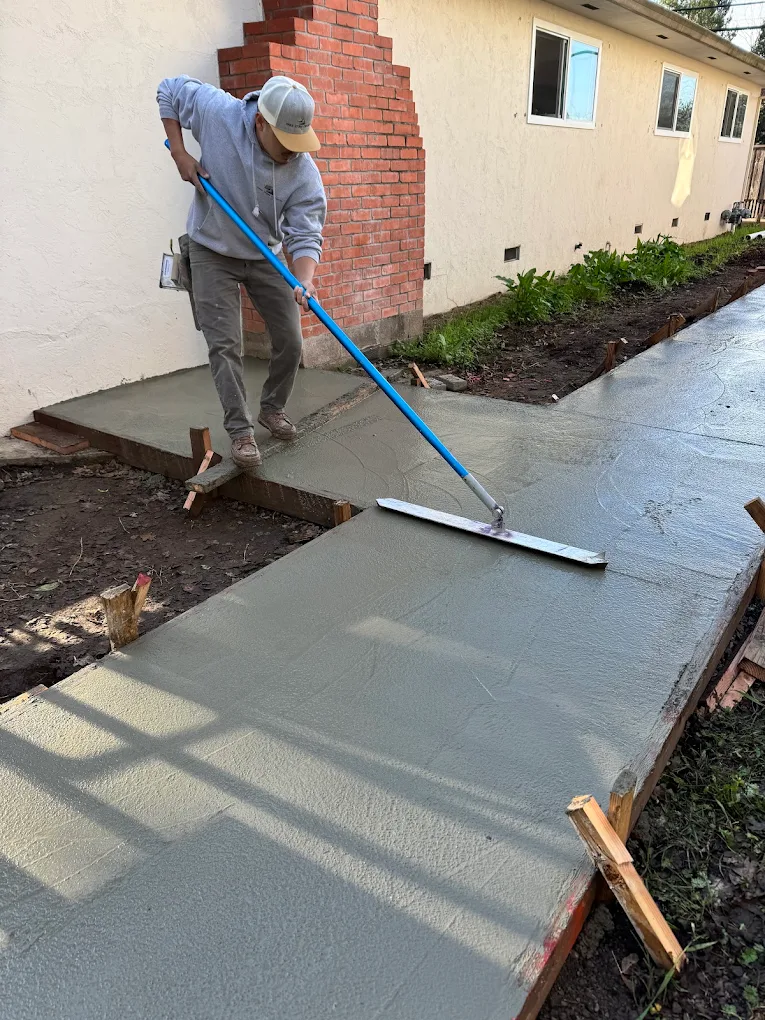
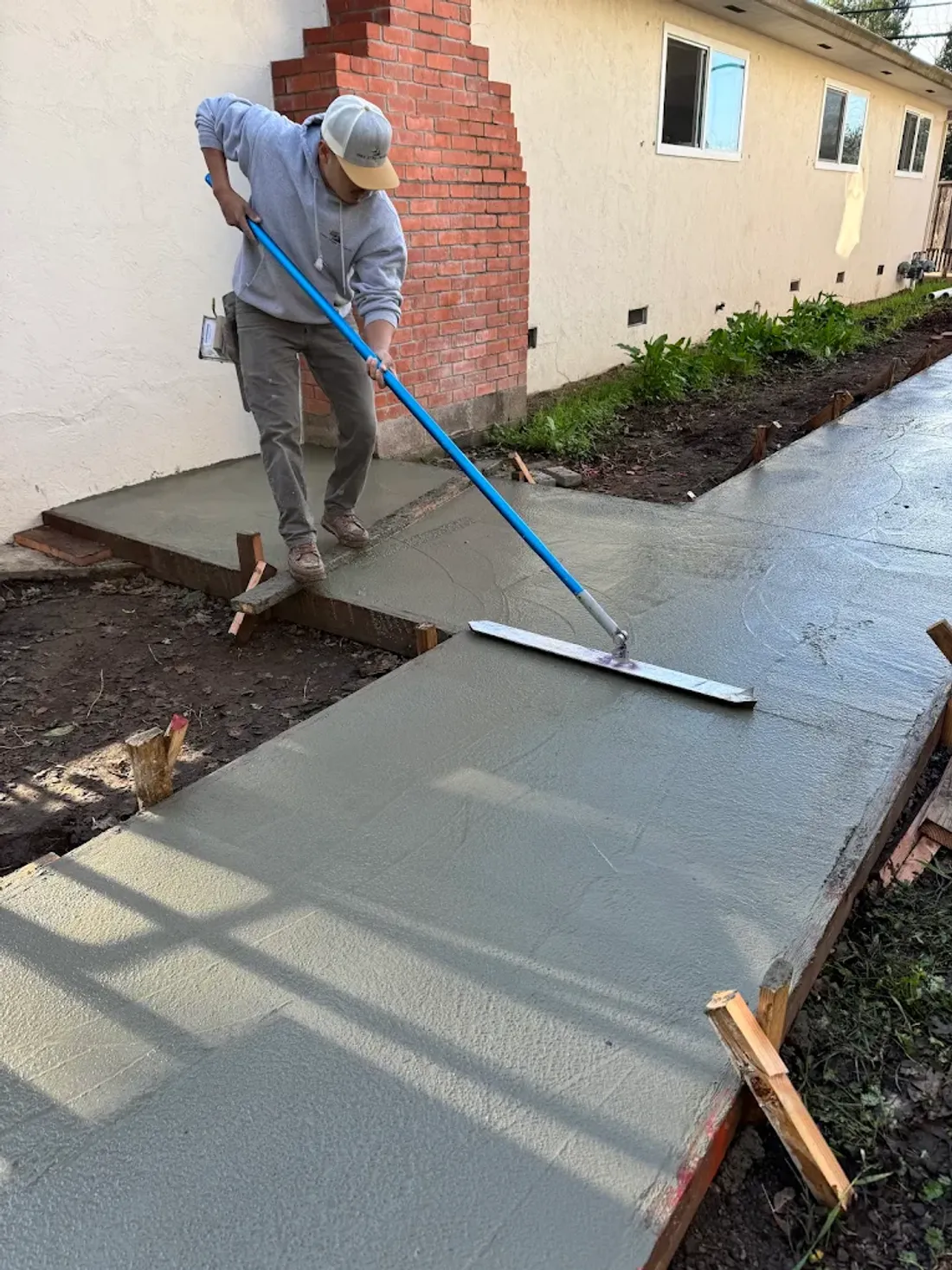
The crew has finished the surface. The forms give it a clean outline, the texture is visible, and the patio or driveway finally looks like the project you planned. It is natural to want to use it immediately.
That is the moment to follow the care plan, not the appearance. Fresh concrete can look finished before it is ready for the activities you have in mind. Walking across it, parking a vehicle, moving heavy equipment, and applying another finish are different decisions.
The best time to discuss those decisions is before the pour. If you know what needs to happen afterward, you can arrange parking, household access, pets, deliveries, and other trades without improvising around new concrete.
Curing is more than waiting for a dry-looking surface
Curing concerns the conditions concrete needs as it develops its properties, including moisture and temperature. It is not simply a countdown based on when the surface looks dry. The method and duration should suit the concrete, the project, and the surrounding conditions.
The National Ready Mixed Concrete Association explains the purpose and methods in CIP 11: Curing In-Place Concrete. That technical background is useful, but it does not replace the instructions for your particular installation.
Ask the contractor what curing approach will be used and who is responsible for carrying it out after the crew leaves. Do not add your own treatment because it worked on another project or appeared in a general online tip. A coordinated plan is better than several people applying different methods without agreement.
Get the instructions before you need them
Request the care information while the schedule is being discussed. At a minimum, you should understand how the area will be protected, which activities are restricted, and who to contact if the plan is interrupted.
A verbal conversation helps, but a written note is easier to share with everyone who uses the property. It can prevent a family member from moving a vehicle onto the driveway because they did not hear the original instructions. It can also give another contractor a clear reference before arriving with equipment.
Ask the instructions to distinguish the uses that matter to your project. “Keep off the concrete” may be appropriate at one stage, but you also need to know how and when restrictions will change. The answer should come from the responsible contractor and project requirements, not from a guessed universal date.
Make a household access plan
Before demolition or placement, identify the entrances and routes you can use while the new area is unavailable. A backyard patio may be the normal path to the side gate. A front landing may serve the only convenient door. A driveway may also be the route for bins and deliveries.
Tell the contractor which of those routes are essential. Do not wait until the concrete is in place to explain that a person needs to cross it several times a day. The sequence or temporary arrangements may need to be considered before work begins.
Keep the plan simple enough that everyone can follow it. A clearly identified alternate entrance is more useful than an informal expectation that people will remember which edge is safe. If the property has visitors, tenants, or regular service providers, include them in the communication.
Arrange vehicle parking for the full interruption
For a driveway project, parking arrangements need to cover more than pour day. Removal, preparation, placement, and the period before vehicle use resumes can all affect access.
Ask when vehicles must leave the work area and where they can reasonably be kept. Think about the different vehicles involved, including trailers, delivery trucks, or service equipment. A schedule for ordinary passenger-car use should not be assumed to cover every heavier load.
If you have a fixed event or essential vehicle movement, tell the contractor early. That may influence the construction timing or reveal that the requested schedule is not practical. It is better to adjust the plan before work than to put a new surface into use earlier than the project instructions allow.
Keep pets and children in the plan
An unfamiliar open area can be interesting to a child or pet, especially if it replaces a familiar path. Protection should account for that behavior rather than rely on a quick verbal warning.
Discuss how the work area will be separated and how household routines will change. A dog that normally reaches the yard through the patio door may need another route. Children may need a different place to play while construction and curing are underway.
Ask before placing anything on the concrete as a temporary barrier. The protection method should not itself damage the surface or interfere with the agreed curing approach. If a barrier is moved or the area is accidentally crossed, contact the contractor rather than attempting a surface repair on your own.
Coordinate the next trade
Concrete is often followed by another activity: a fence installation, a pergola, landscaping, equipment placement, or a floor finish. Those contractors need to know the project-specific restrictions before scheduling their work.
Explain what they plan to bring onto the surface. A person walking across it is different from a loaded cart, a lift, a delivery pallet, or a vehicle. The concrete contractor and the next trade should agree on the relevant conditions instead of relying on the phrase “the concrete will be done.”
For a garage coating or other applied finish, the finish installer may have its own requirements for surface condition and moisture. Coordinate those requirements in advance. The point at which concrete can be walked on does not automatically establish readiness for a coating system.
Ask about curing products and future finishes
If a future finish is planned, identify it before the concrete work. The selected curing method and any surface products need to be considered with that later system. Do not assume that all products are compatible simply because both are intended for concrete.
Keep the product information and the contractor’s instructions with the project records. That gives the next installer something specific to review. It also helps when you ask about cleaning or maintenance later.
If the future finish is undecided, say so. The contractor can explain which decisions need to be resolved and what information will be needed before another treatment is applied. Guessing now may create extra preparation work later, so it is worth keeping the sequence clear.
Expect the appearance to develop
A new surface can look different at different stages and under different lighting or moisture conditions. Avoid judging the final appearance immediately after placement or comparing one damp area with another dry area as though they are in the same condition.
That does not mean you should ignore a concern. Photograph it, note when you observed it, and ask the contractor what you are seeing. An overall view and a closer photograph are more useful together than a tightly cropped image with no context.
Do not try to correct the color or texture with a cleaning chemical, sealer, or abrasive method before asking. An improvised treatment can complicate the original question. Let the responsible contractor evaluate the surface and explain the appropriate next step.
Have a plan for interruptions
Weather, an unexpected delivery, a damaged barrier, or a household emergency can disrupt the original care plan. Ask who to contact and what information to provide if that happens.
Describe the event plainly: when it occurred, which area was affected, and what crossed or contacted the surface. Take photographs if useful. Avoid assuming that a visible mark means the whole project is ruined, or that no visible mark means there is nothing to discuss.
The contractor can advise on the actual situation and whether an inspection or other action is needed. The important thing is to communicate promptly rather than apply a guessed remedy. A project-specific response is more useful than searching for a universal fix while the condition changes.
Separate early care from long-term maintenance
The first-use instructions are not the same as the routine maintenance plan. Early care focuses on the new installation and its restrictions. Long-term care addresses cleaning, exposure, joints, and any finish or sealer over time.
Ask for both, but keep them clearly labeled. A cleaning method appropriate for an established surface may not belong on fresh concrete. Likewise, a temporary protection method is not necessarily a permanent maintenance recommendation.
For a decorative patio, understand the care expected for the specific finish. For a driveway, ask about spills and the materials that may contact it during ordinary use. The answers should be tied to what was actually installed, not to a general list that ignores the selected products.
Keep a small project record
A simple folder can make future questions easier. Save the scope, finish description, relevant product information, care instructions, and photographs of the completed work. Include contact details for the contractor and any later finish installer.
You do not need a technical archive. The useful record answers basic questions: what was built, when it was placed, what treatment was used, and what guidance was provided? If the property changes hands or a later repair is needed, those details can prevent guesswork.
Take a few wide photographs after the project reaches the stage the contractor recommends for final review. They can show the overall appearance and connections without pretending that every future condition can be diagnosed from an image.
Questions to settle before pour day
Use this short list to check that the first-use plan is complete:
- What curing method is planned, and who maintains it?
- Which entrances and routes will remain available?
- When can the specific types of foot, vehicle, or equipment traffic resume?
- How should the area be protected from pets, children, and deliveries?
- What does the next trade need to know before arriving?
- Are any curing products relevant to a future coating or finish?
- Who should be called if the protection or care plan is interrupted?
If an answer depends on conditions at the time, ask how the final decision will be communicated. You need a dependable point of contact more than you need an oversimplified promise far in advance.
Let the completed work have a proper start
The pour is a major milestone, but the project is not just the day the concrete arrives. Preparation, placement, finishing, curing, and return to use belong to the same plan.
Hard Stone Concrete discusses that sequence for patios, driveways, and concrete slabs in Windsor and Sonoma County. Tell us about the access and timing you need when you request an estimate. We can include the first days after placement in the conversation from the beginning.