
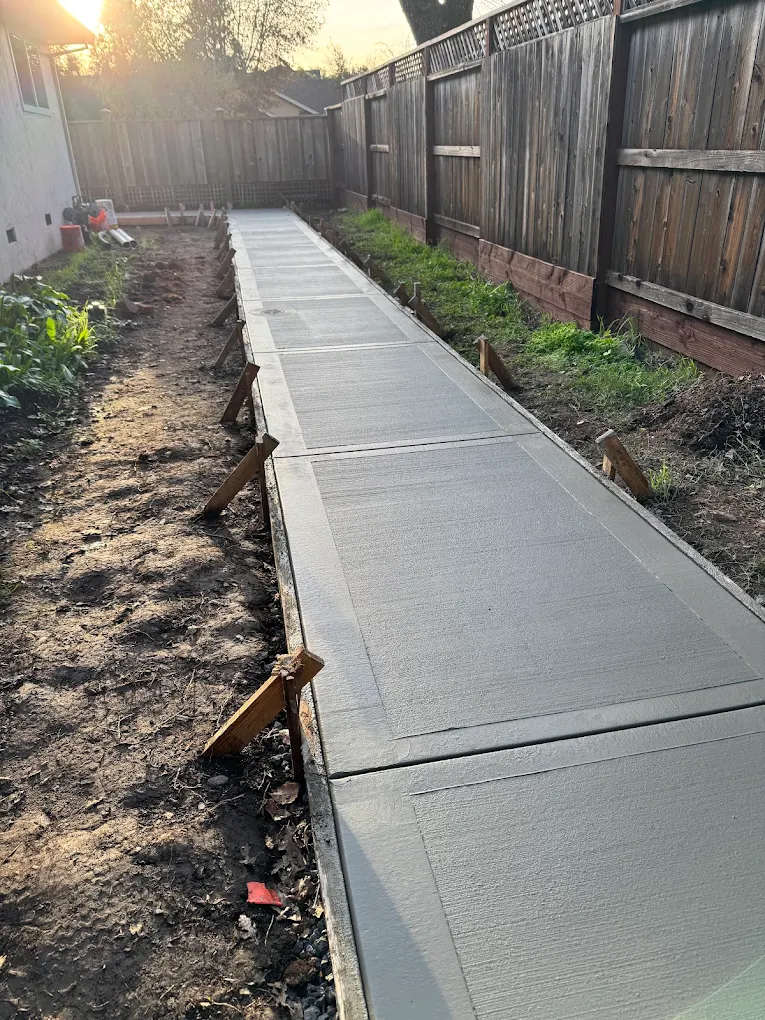
Concrete Driveway Aprons in Windsor, CA
Get the transition right where surfaces meet.
A driveway apron is the transition at a driveway connection, commonly near the street or garage. That small area can carry turning vehicles, cross a walking route, and control how water moves between surfaces. Its elevations deserve careful attention.
We discuss concrete driveway apron installation and replacement in Windsor and Sonoma County. The first step is to identify which connection you mean and what needs to improve: a damaged street approach, an awkward garage entry, or a transition that sends water the wrong way.
Discuss your project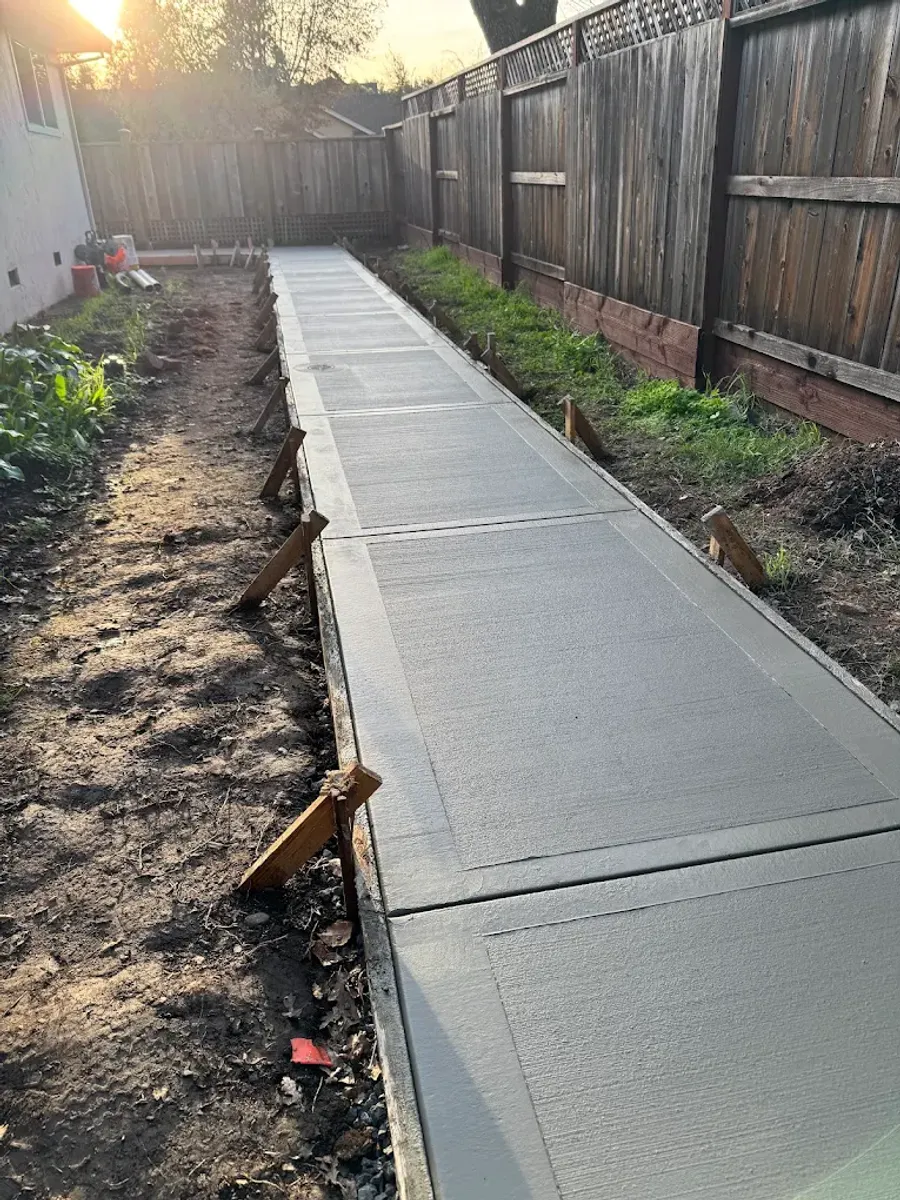
Work from the fixed points.
The street, gutter, public sidewalk, garage threshold, and existing driveway may all establish levels that cannot simply be moved. The apron has to connect them in a workable way. Vehicle clearance and the walking route need to be considered together.
At the street, the project may fall within the public right-of-way and require local approval or specific construction details. At the garage, the relationship to the building and drainage becomes central. Those are related but distinct scopes.
- Exact apron location and purpose
- Fixed street or garage elevations
- Vehicle clearance and walking route
- Drainage and local approval requirements
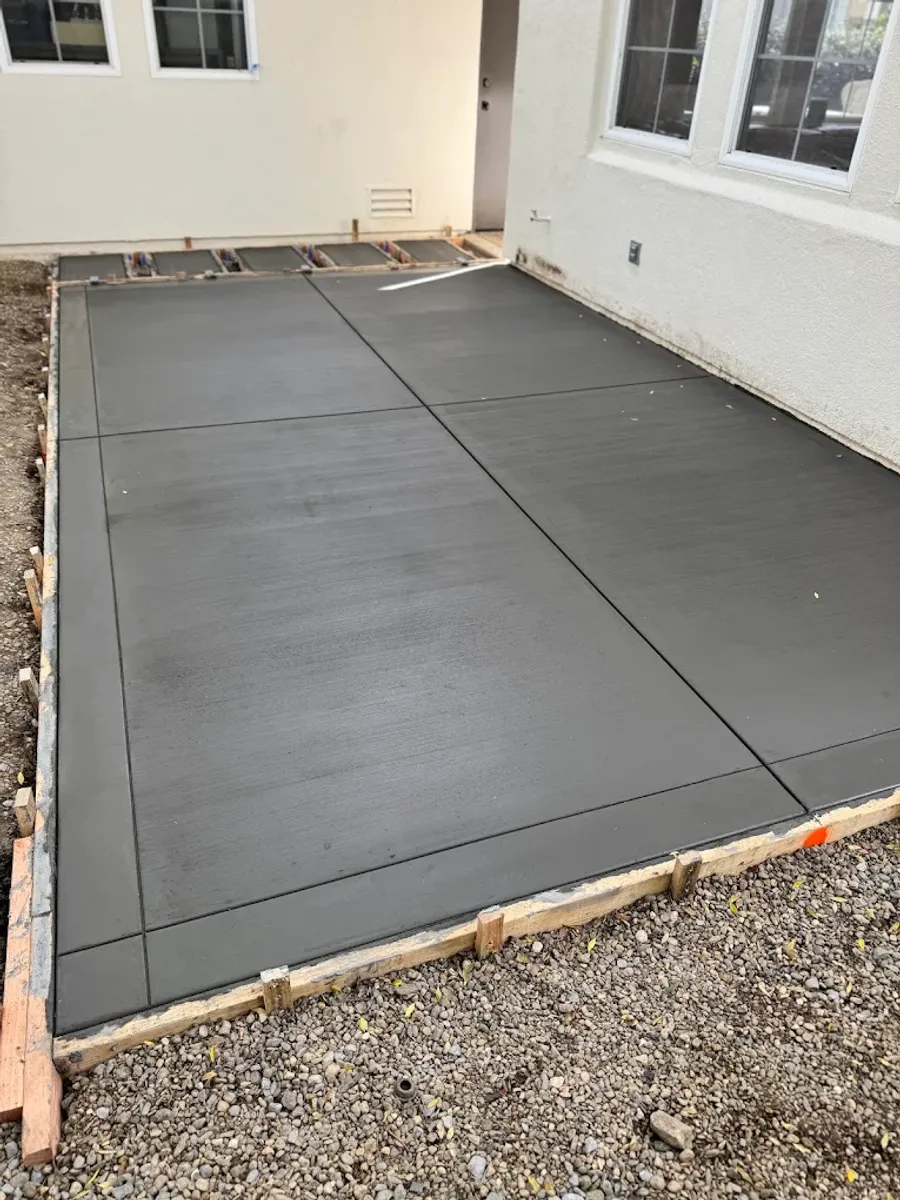
Windsor driveway connections
Windsor publishes encroachment-permit requirements for work in the public right-of-way. If the apron touches the sidewalk, curb, or street, we include that jurisdictional question in planning. Other Sonoma County cities have their own review processes.
See our service areasSeparate the property work from the street connection.
An apron can involve the driveway, sidewalk, curb, and street in a small area. Before comparing proposals, establish which parts are included and who is responsible for any required approvals or related work. The visible concrete alone may not describe the complete project.
If the aim is to improve a difficult vehicle approach, describe when the problem occurs and with which vehicle. Photographs from the side can help the initial conversation. The final approach still needs to fit the fixed levels, drainage, and requirements at the actual site.
Details to agree
- The boundary between private and public work
- Responsibilities for approvals and adjoining surfaces
- The vehicle movement the project should improve
Show the approach from the side
A side view can reveal a steep transition that is hard to see in a straight-on photograph. Include the adjoining driveway and any place where a vehicle scrapes or water collects. Explain whether the problem happens with every vehicle or a particular one.
Ask the estimate to show the replacement boundary and any related sidewalk, curb, or driveway work. A small apron project can leave unfinished connections if the surrounding surfaces are ignored. We define those connections before construction begins.
Talk through the work: (415) 624-7323Questions about concrete driveway aprons
Is a street apron part of my private driveway project?
It may be included in the construction scope, but work in the public right-of-way can have separate requirements. The boundary and approvals need to be identified.
Can an apron stop water entering the garage?
It may be part of a solution, but the available levels and drainage route must be reviewed. A new apron alone cannot be assumed to solve every water problem.
Work that may belong together
The apron should work with the driveway and any sidewalk crossing it.
Tell us what you have in mind.
A new patio, a worn driveway, or a project still taking shape. Share the location, a few photos, and what you want the space to do. We can start there.