Concrete Leveling in Windsor, CA
Uneven concrete needs a cause, a goal, and a workable correction.
When one panel sits above or below the next, the first question is why. Ground movement, roots, support conditions, and the way water reaches the slab can all affect the situation. The visible height difference is the symptom to assess, not a complete diagnosis.
We review uneven concrete and discuss the correction appropriate to the site. This may involve a limited surface correction, replacement of a panel, or another method suited to the condition. We do not promise one lifting or injection technique for every slab.
Discuss your project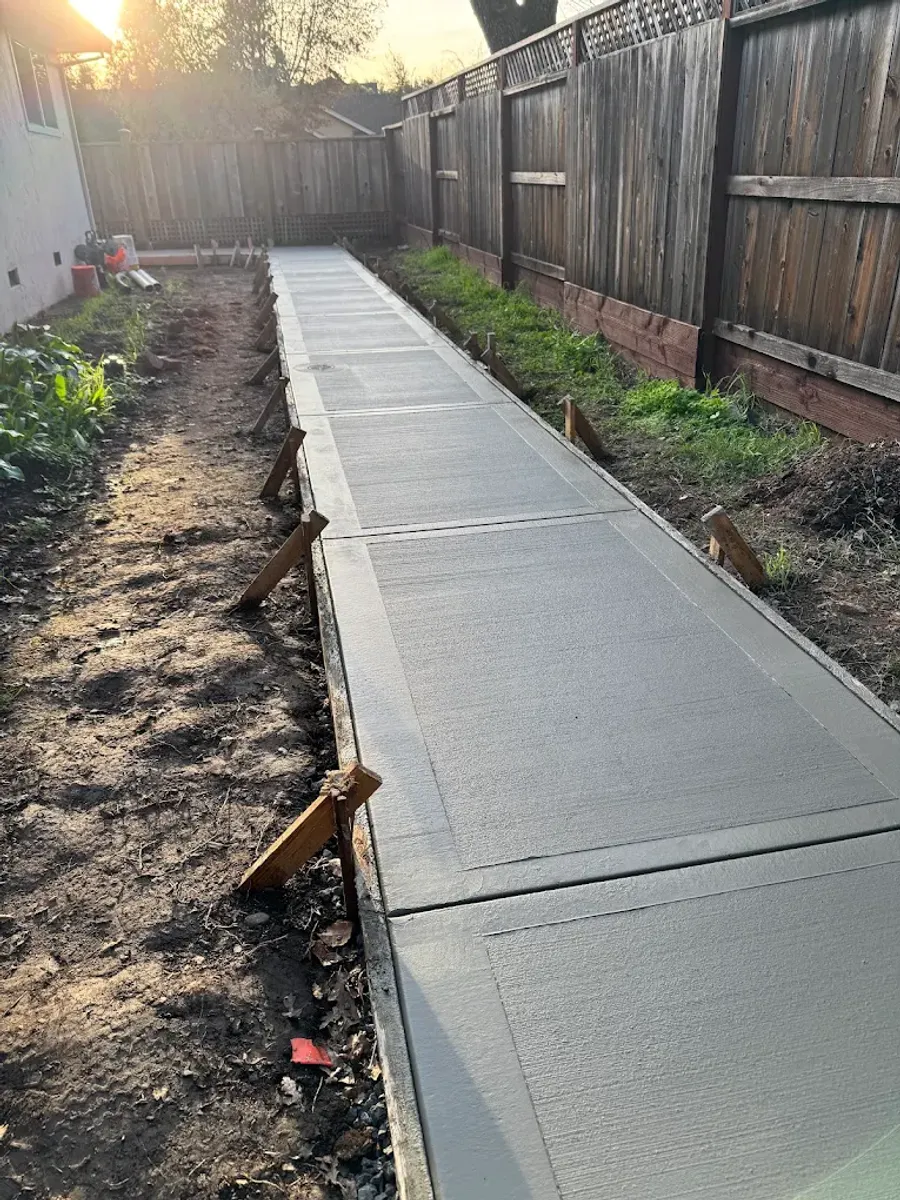
Look at the route around the low spot.
Correcting one panel can change the way it meets the next panel, a door, or a drain. The desired final level must work with those fixed points. If the slab has broken into several pieces or its layout is already wrong, trying to preserve every piece may not be practical.
For structural concrete or persistent movement, a separate professional assessment may be needed before choosing a repair. We keep the distinction clear between improving a walking surface and addressing a building support problem.
- Height difference and affected area
- Condition of the slab itself
- Connections to doors and drains
- Likely causes that need separate attention
Walkway concerns around Windsor
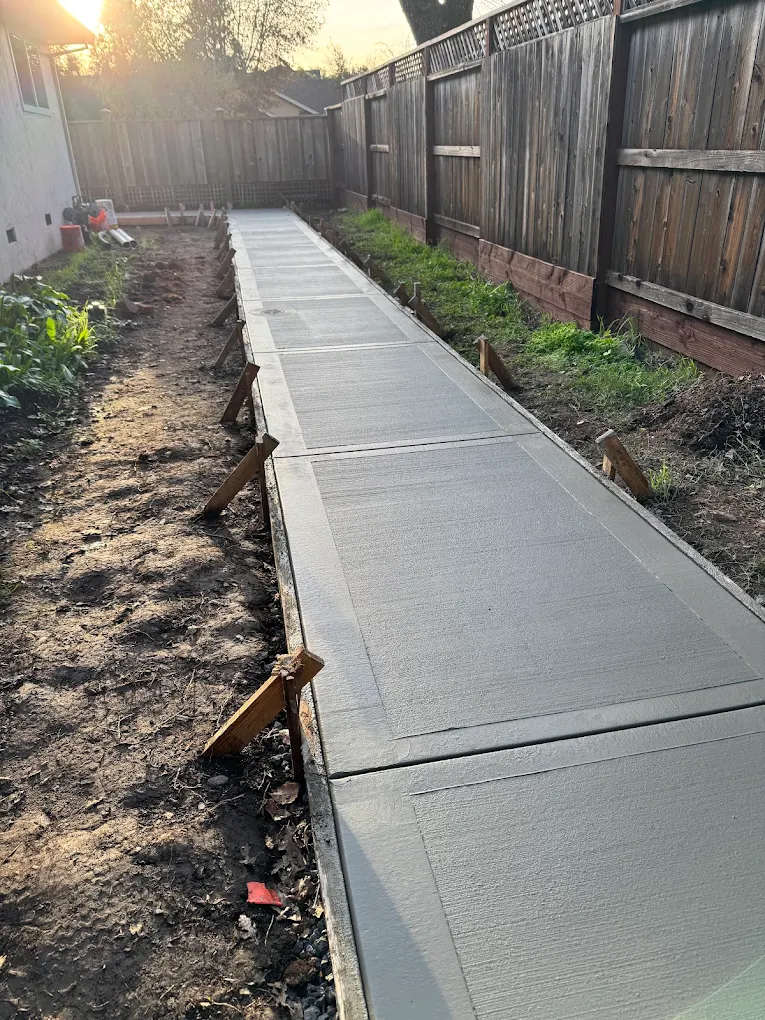
An uneven path can be particularly awkward where a narrow side yard leaves little room to step around it. Show us the whole route, including gates and corners. If the affected panel is in a public sidewalk, city requirements are part of the review.
See our service areasLook at what a height change would affect.
A low section may meet another walkway, a doorstep, a wall, or a drain. Changing that section’s position can affect those relationships. The right question is not simply whether it can be raised, but whether the proposed result leaves the surrounding route working properly.
We review leveling as a possible scope after looking at the concrete and the apparent source of movement. Where the surface or support condition makes another approach more appropriate, we discuss that distinction. The evaluation should lead to a defined result, not a promise that every settled slab can be restored the same way.
Details to agree
- Connections at both ends of the affected area
- The intended drainage route
- Leveling compared with repair or replacement
What has changed over time?
Tell us when you first noticed the difference and whether it changes with the seasons or after irrigation. Older photos can help show whether movement is continuing. Avoid describing the problem only as a need to lift the concrete; the appropriate correction comes after the assessment.
We will discuss the limits of a repair, the appearance of any replaced area, and the work needed around it. A defined replacement can sometimes solve more of the problem than a narrow leveling request.
Talk through the work: (415) 624-7323Questions about concrete leveling
Do you use foam lifting on every leveling project?
No specific lifting system is promised here. We first assess the slab and discuss a suitable method or replacement, including whether a specialist is needed.
Can leveling fix poor drainage?
Only if the proposed finished levels actually provide a suitable drainage route. The surrounding surfaces and fixed thresholds must be considered together.
Work that may belong together
Uneven concrete can overlap with walkway, slab, or broader replacement work.
Tell us what you have in mind.
A new patio, a worn driveway, or a project still taking shape. Share the location, a few photos, and what you want the space to do. We can start there.