Concrete Demolition & Removal in Windsor, CA
Make the removal boundary clear before breaking anything.
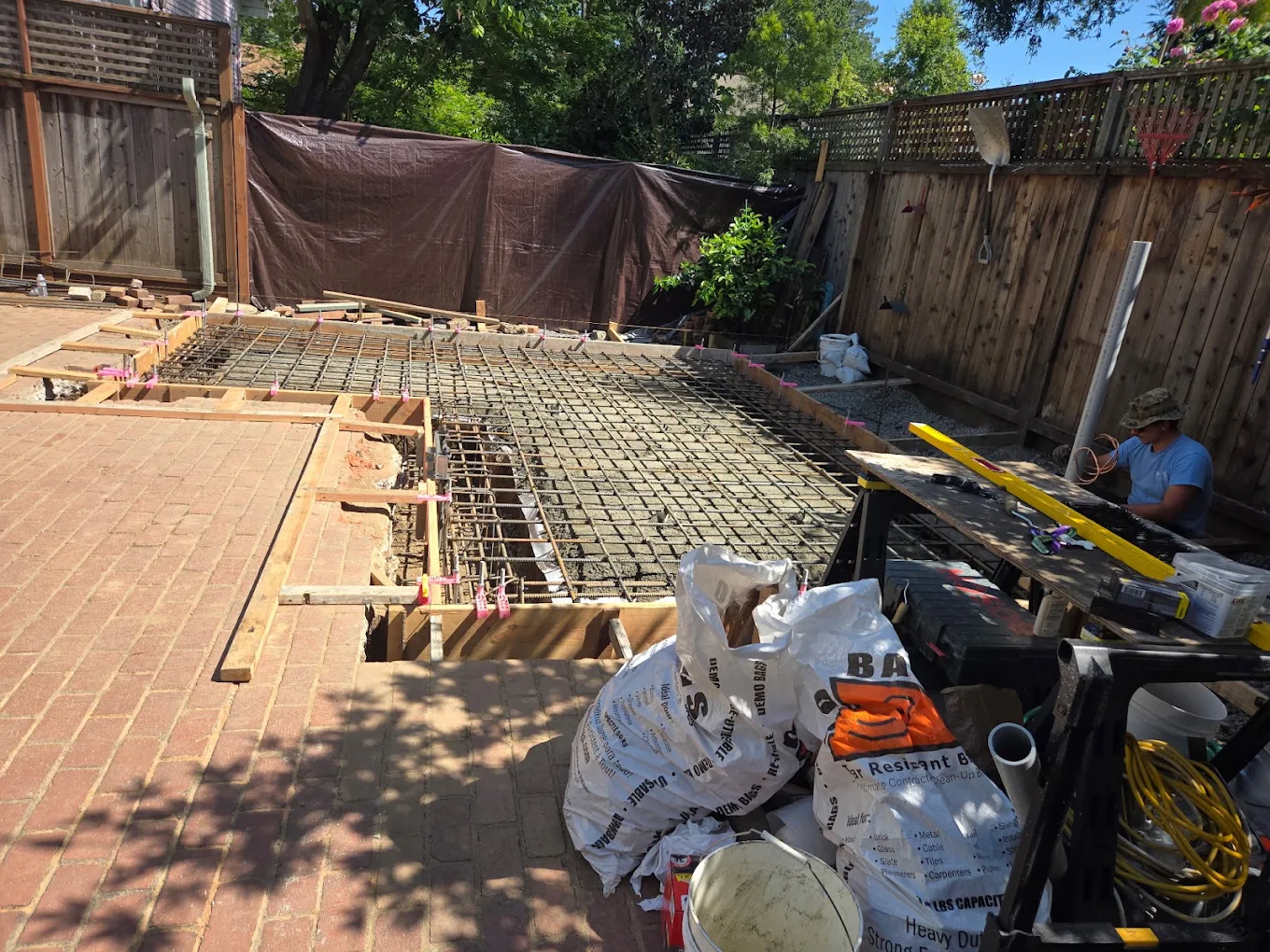
Removing concrete is a project in its own right. The work needs a defined limit, a way to protect what stays, and a practical route for getting material out. A slab beside a house or pool requires a different approach from an isolated pad with open access.
We discuss concrete demolition and removal for replacement projects and other property improvements. Tell us what is coming next so the removal can leave a useful starting point rather than simply an empty area.
Discuss your project
Protect the neighboring work.
Old concrete may connect to walls, steps, drains, or adjoining slabs in ways that are not obvious from the surface. Known utilities and embedded services need to be identified before removal. The condition and construction of the existing slab can affect the method and time involved.
The edge of the removal should be considered with the next phase. A clean boundary at an appropriate joint can be more useful than stopping at the smallest visible patch of damage. We discuss that boundary before the estimate is finalized.
- Exact concrete to remove and retain
- Nearby structures and known services
- Equipment access and material hauling
- Condition required for the next phase
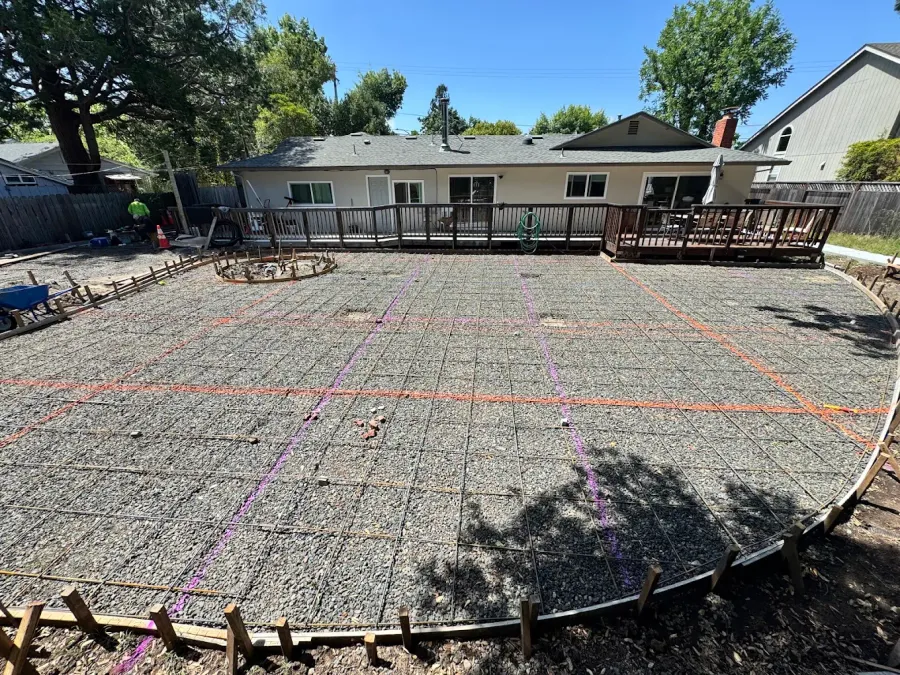
Working through narrow Sonoma County yards
Many residential removal projects depend on a side-yard route rather than direct vehicle access. Include gate widths, steps, and anything that cannot be moved. Those constraints help us discuss the job realistically before equipment arrives.
See our service areasDraw the boundary around what is staying.
A removal line is easier to discuss when the neighboring features are identified. Mark the concrete that comes out and the paths, walls, fixtures, or landscaping that should remain. Wide photographs help show how those pieces relate to one another.
If the next phase is not being built immediately, discuss the condition of the area between projects. A demolition handoff and a new ready-to-use surface are different outcomes. We can define cleanup and access expectations so you know what will be left when the removal work is complete.
Details to agree
- A clear edge between removal and retained work
- Protection of adjoining features
- Access and cleanup between construction phases
Demolition does not automatically include rebuilding
The estimate should state whether the work ends after removal, includes preparation for new concrete, or covers a complete replacement. It should also identify hauling, cleanup, and any surrounding restoration.
If the old slab will be replaced, show us the proposed layout at the same time. There may be an opportunity to correct an awkward edge or drainage relationship, but that work must be deliberately included rather than assumed to happen with demolition.
Talk through the work: (415) 624-7323Questions about concrete demolition & removal
Can you remove a section and leave the rest?
Often that can be evaluated. The condition, connections, and appropriate removal boundary determine whether a partial removal is practical.
Will the ground be ready for landscaping afterward?
That depends on the agreed scope. Removing concrete, removing base material, and preparing planting soil are separate tasks that should be specified.
Work that may belong together
Connect demolition with the next construction step when replacement is the goal.
Tell us what you have in mind.
A new patio, a worn driveway, or a project still taking shape. Share the location, a few photos, and what you want the space to do. We can start there.