Concrete Resurfacing in Windsor, CA
A new surface needs something sound beneath it.
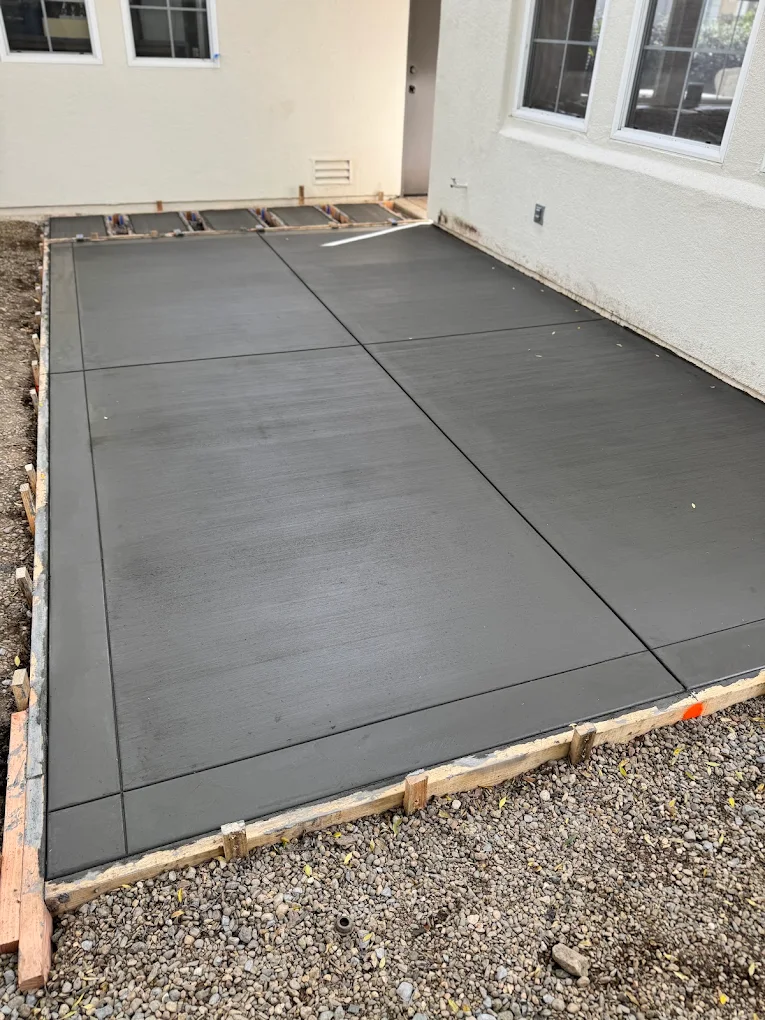
Resurfacing can refresh suitable existing concrete without replacing the entire slab. The key word is suitable. An attractive new wearing surface cannot be expected to stabilize concrete that is moving or solve a drainage problem built into the underlying grades.
We review the slab before discussing a resurfacing system. Its condition, previous coatings, moisture exposure, and intended use all matter. Sometimes surface preparation and a compatible treatment make sense. Sometimes removal and replacement are the more honest recommendation.
Discuss your project
Preparation is part of the finished result.
Contamination, loose material, and incompatible coatings can interfere with a new surface. Preparation requirements depend on the selected system and what is already there. The estimate should name that work, not just describe the final color.
Existing joints and cracks need a plan as well. Covering a joint on the surface does not erase the movement below it. We discuss how these features will be treated and what may remain visible after the work is complete.
- Existing slab stability and condition
- Old paint, sealers, or coatings
- Surface preparation and system compatibility
- Joints, edges, and added surface height
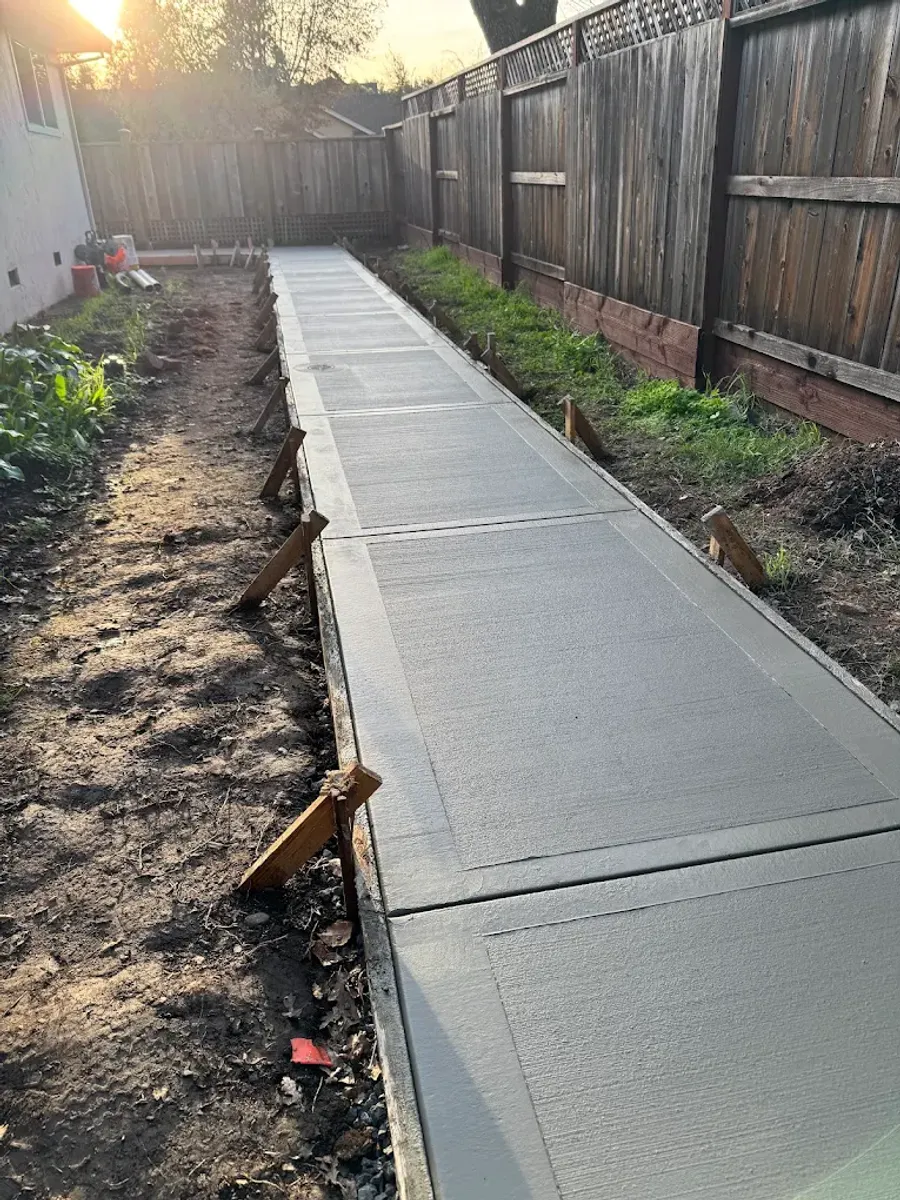
Updating an outdoor surface in Sonoma County
Shaded walkways, irrigated patios, and sunny open slabs have different exposures. Tell us where the surface stays damp and how it is cleaned. We use the actual setting to discuss options rather than applying one treatment to every property.
See our service areasCheck the edges as carefully as the open surface.
A surface treatment has to finish somewhere. Doorways, drains, steps, and the edge of an adjoining slab can be more important to the decision than the middle of the patio. We look at those connections before treating resurfacing as a purely cosmetic choice.
Bring up anything that is already tight, such as a door clearance or a shallow transition. The proposed treatment needs to suit the existing concrete and the space around it. If it cannot resolve the underlying condition or leave workable edges, a different repair or replacement scope may be the better discussion.
Details to agree
- Door and drain connections
- How the treatment ends at surrounding materials
- Limitations of the existing surface
Compare resurfacing with replacement
Bring the long-term goal into the estimate conversation. If the slab is too small, drains poorly, or sits at the wrong height, preserving it may leave the main problem unchanged. Resurfacing is most useful when the existing layout is worth keeping.
Ask about cure time, access restrictions, cleaning, and any future renewal of the finish. Those details affect the value of the work just as much as the first-day appearance.
Talk through the work: (415) 624-7323Questions about concrete resurfacing
Does resurfacing stop cracks from coming back?
It should not be assumed to stop movement in the underlying slab. We review the cracks and discuss limitations before proposing a surface treatment.
Can resurfacing change the slope of a patio?
Minor surface correction and a major drainage redesign are different scopes. The existing levels need to be checked before deciding whether a surface system can address the problem.
Work that may belong together
Compare the surface treatment with the alternatives before committing to a finish.
Tell us what you have in mind.
A new patio, a worn driveway, or a project still taking shape. Share the location, a few photos, and what you want the space to do. We can start there.