
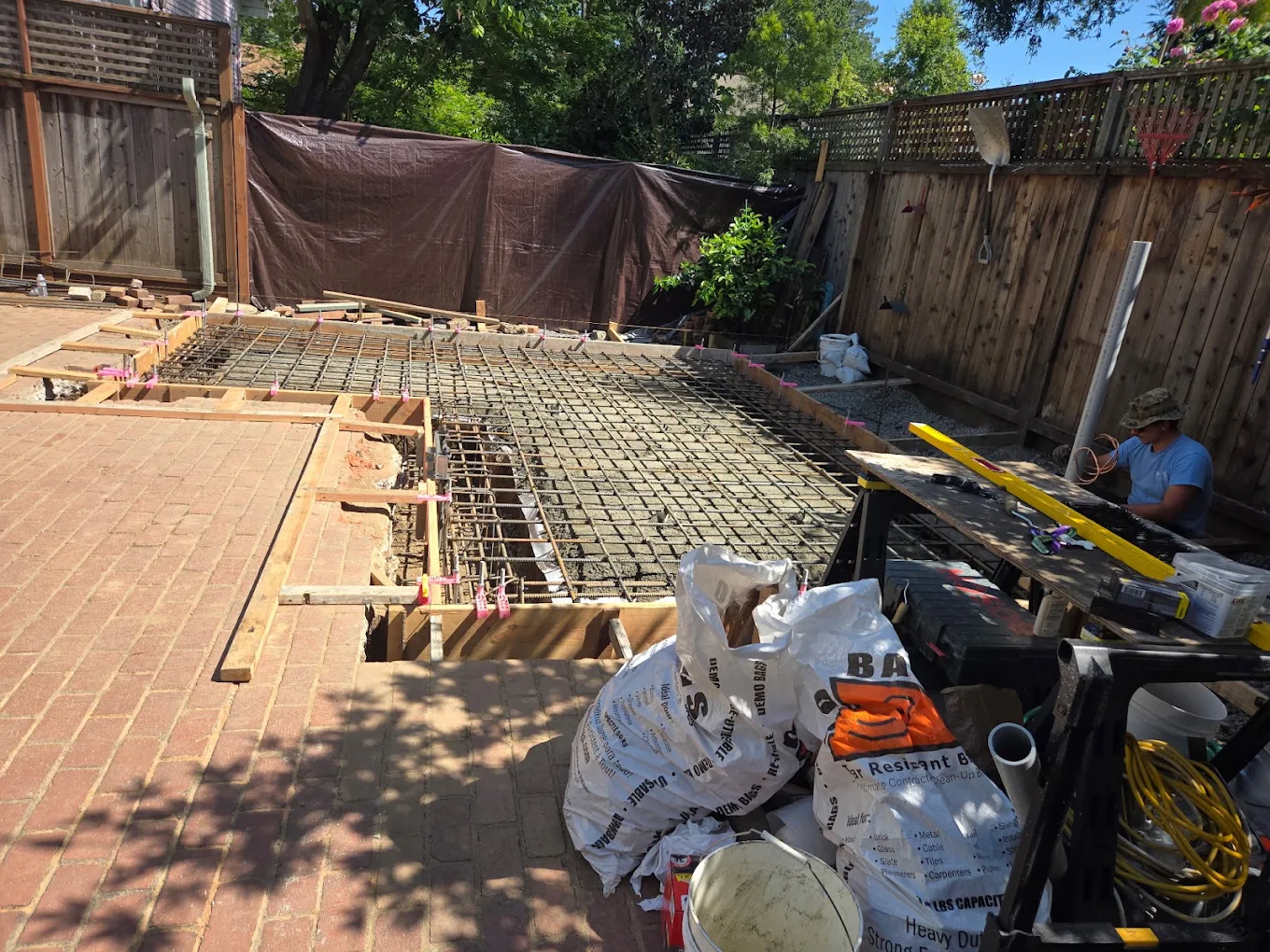
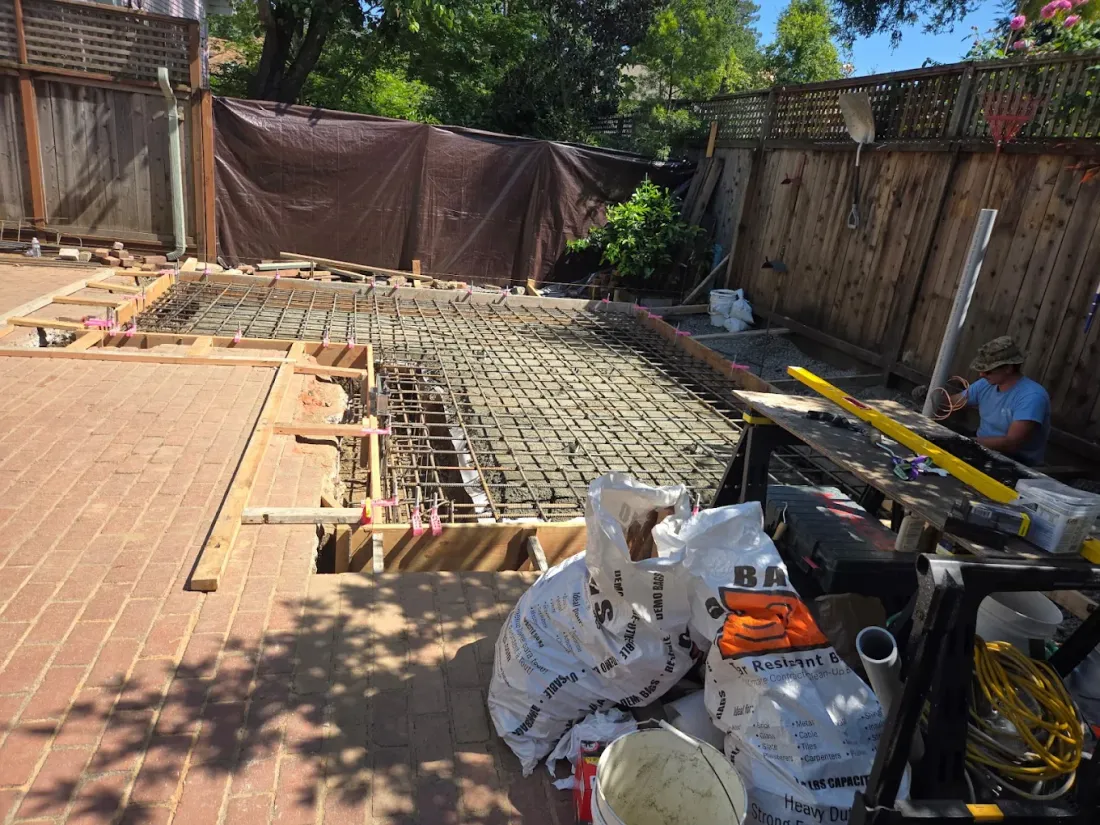
Removing an old patio or driveway can sound like the simplest part of a concrete project: break it up and take it away. In practice, a useful removal plan answers several questions before the first section is disturbed. What stays? What lies nearby? How does material leave? What condition is needed for the next phase?
Those answers matter whether Hard Stone Concrete is replacing the surface or you are clearing the area for a different improvement. A demolition scope should describe a deliberate starting point for what comes next, not just the disappearance of the old concrete.
Use the checklist below to prepare the property and the estimate conversation. It focuses on owner decisions and coordination; the contractor should determine the appropriate removal method for the site.
1. Mark exactly what is being removed
Use a photograph, sketch, or plan to identify the concrete included in the work. Show the boundaries clearly, especially where the surface meets another slab, a wall, steps, a drain, or a building.
Do not assume a phrase such as “remove back patio” answers every edge question. Does that include the narrow strip beside the house? The landing at the door? The connected path? A contractor can price a clear area more reliably than a description that depends on an unspoken mental picture.
For partial removal, ask why the proposed boundary is practical. It may need to follow an existing joint or include a complete section rather than stop at the smallest visible damaged spot. Understanding that choice helps you evaluate the scope before the work begins.
2. Label the concrete and features that stay
The retained areas deserve as much clarity as the demolition area. Identify sound paving, walls, steps, planting, fences, and other features that need to remain. Photograph their condition before construction as part of an ordinary project record.
Explain which items are fixed and which can be moved. A loose planter is different from a built-in feature. A path scheduled for later replacement is different from a recently finished surface you want protected.
The contractor can then discuss the working method and protection plan with those priorities in view. Avoid relying on a broad assumption that nothing outside the removal outline will be affected. The route for equipment and hauling may need its own protection and restoration discussion.
3. Explain the next use of the area
Removal for a new concrete slab is different from removal for planting, another paving material, or a building project. The condition needed afterward depends on that next use.
Tell the contractor what comes next, even if another trade will do it. Does the area need to be ready for a specified base preparation? Is existing base material also being removed? Will excavation continue? Is the intended finished level changing?
A removal estimate should not leave these questions hidden behind the word “clear.” Breaking out concrete, hauling it away, removing underlying material, and preparing a finished planting bed are separate tasks. Assign them so the next contractor does not arrive expecting a condition that was never included.
4. Share known information about buried services
Provide any available plans or reliable information about utilities, drains, irrigation, and other services near or beneath the work. Mention previous alterations that may not be obvious from the surface.
This information helps frame the work, but it does not replace the appropriate locating and review process. Do not assume that a remembered pipe route is exact or that an outdoor slab cannot have services associated with it.
If a service needs to be disconnected, relocated, protected, or reviewed by another trade, put that task into the sequence before removal begins. The demolition crew should not be left to discover that an essential connection was supposed to be handled by someone who has not yet been scheduled.
5. Walk the hauling route
Follow the path from the demolition area to the place where removed material will be collected or loaded. Photograph gates, turns, steps, narrow passages, overhead constraints, and surfaces that need protection.
A large work area can still have restricted access. Conversely, an open route may make a modest project more straightforward. The contractor needs the actual conditions to discuss the method and schedule.
Do not remove gates or landscaping in advance unless the plan calls for it. Opening one part of a route may not solve another bottleneck. Coordinated preparation avoids unnecessary disturbance and makes sure the owner’s work actually helps the construction process.
6. Agree on staging and loading space
Identify where equipment and removed material can be placed during the work. The location may affect parking, deliveries, household access, or other activity on the property.
If the plan depends on using a public area, confirm any applicable requirements rather than assuming the space is available. The contractor should know about restrictions or conditions that could affect the proposed arrangement.
Keep the staging area specific. “Use the driveway” may still leave questions about which section, whether vehicles must be moved, and when the area will be cleared. A short agreement about the space can prevent confusion during a phase that may otherwise feel temporary and informal.
7. Plan the routes people still need
An old path or driveway may remain essential until the day it is removed. Think through where people, pets, bins, and deliveries will go afterward. If the work affects a main entrance, raise that before the schedule is set.
For an occupied business or shared property, access planning may involve several people and applicable requirements. Identify who communicates the temporary arrangement and who is responsible for maintaining it.
Do not assume the interruption ends as soon as removal is complete. If new concrete follows, preparation and curing extend the period before the route returns to normal use. The access plan should cover the complete project sequence rather than only the demolition day.
8. Understand how unexpected conditions will be handled
Removing concrete can reveal information that was not available during the first site visit. The existing thickness, reinforcement, connections, or material below may differ from assumptions used in the estimate.
Ask how the contractor will document a discovery that changes the work and how any revised scope will be discussed. The answer should identify a communication process, not imply that every concealed condition can be predicted in advance.
This helps protect both the schedule and the owner’s understanding. If another professional needs to review a condition before work continues, that should be explained. A pause tied to a specific unresolved issue is more useful than an improvised decision made simply because the area is already open.
9. Separate demolition from repair to adjoining construction
An old slab may meet siding, a foundation, a door landing, or another surface that has its own condition. Removing the concrete does not automatically include repairing every adjacent feature.
If you already know about related damage, show it during the estimate visit. Ask whether it belongs in the concrete scope or needs another trade. If it is discovered during removal, use the agreed process for evaluating and assigning it.
The goal is not to create gaps between contractors. It is to make each responsibility visible. A complete project can involve several trades as long as the handoffs are defined and the final condition is understood by everyone involved.
10. Review cleanup and the handoff condition
Ask what the area will look like when the removal scope is complete. Will debris be hauled away? What material remains? Will the surface be ready for the next agreed preparation step? Which surrounding areas will be cleaned or restored?
A photograph or short written description of the intended handoff can help if another contractor follows. The next trade should receive a clear account of what has been done, not just the message that demolition is finished.
If the area will remain open between phases, discuss protection and access during that interval. The owner needs to know which parts can be used and which remain part of the construction area. Temporary does not mean unplanned.
Two removal projects that need different scopes
Imagine one owner replacing a worn patio with new concrete in a revised shape. The removal boundary, excavation, preparation, and new layout need to connect. The contractor should know the proposed finished result before deciding where the old surface comes out.
Now imagine another owner removing a utility pad to make room for planting. The appropriate handoff may involve a different amount of underlying material removal and a separate landscape preparation scope. “Remove the concrete” describes only one part of that outcome.
These examples illustrate why the next use matters. They are not descriptions of specific completed jobs. The same visible demolition area can lead to different work depending on what the property owner expects after the concrete is gone.
Put the checklist beside the estimate
You do not need a long document to make the scope reviewable. A marked photograph, a few access pictures, and a short list of responsibilities can cover much of the planning information.
When the proposal arrives, check it against the desired result. Are the removal limits clear? Is hauling included? Are preparation and restoration assigned? Does the plan account for the routes people still need? If an item is missing, ask rather than filling the blank with an assumption.
Hard Stone Concrete provides concrete demolition and removal and complete tear-out and replacement in Windsor and Sonoma County. We can review removal as part of the next concrete phase or discuss a defined handoff to other work.
Contact us with the project location, overall photographs, and the use you have in mind for the cleared area. A good removal plan leaves more than an empty space. It leaves the right starting point.