
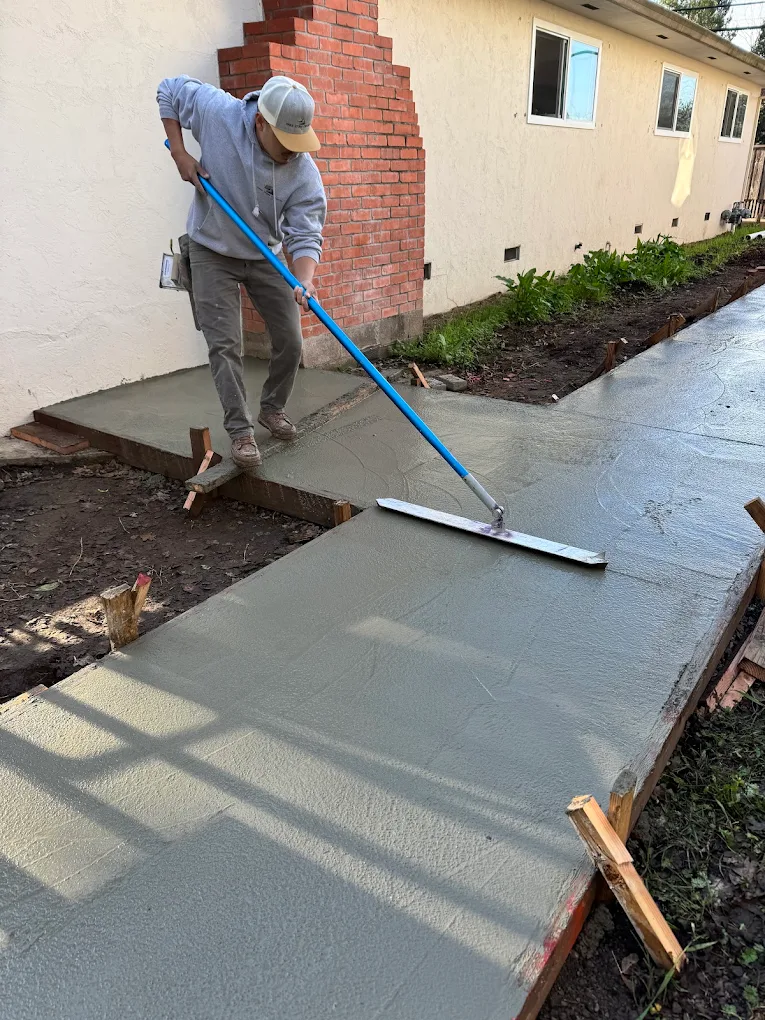
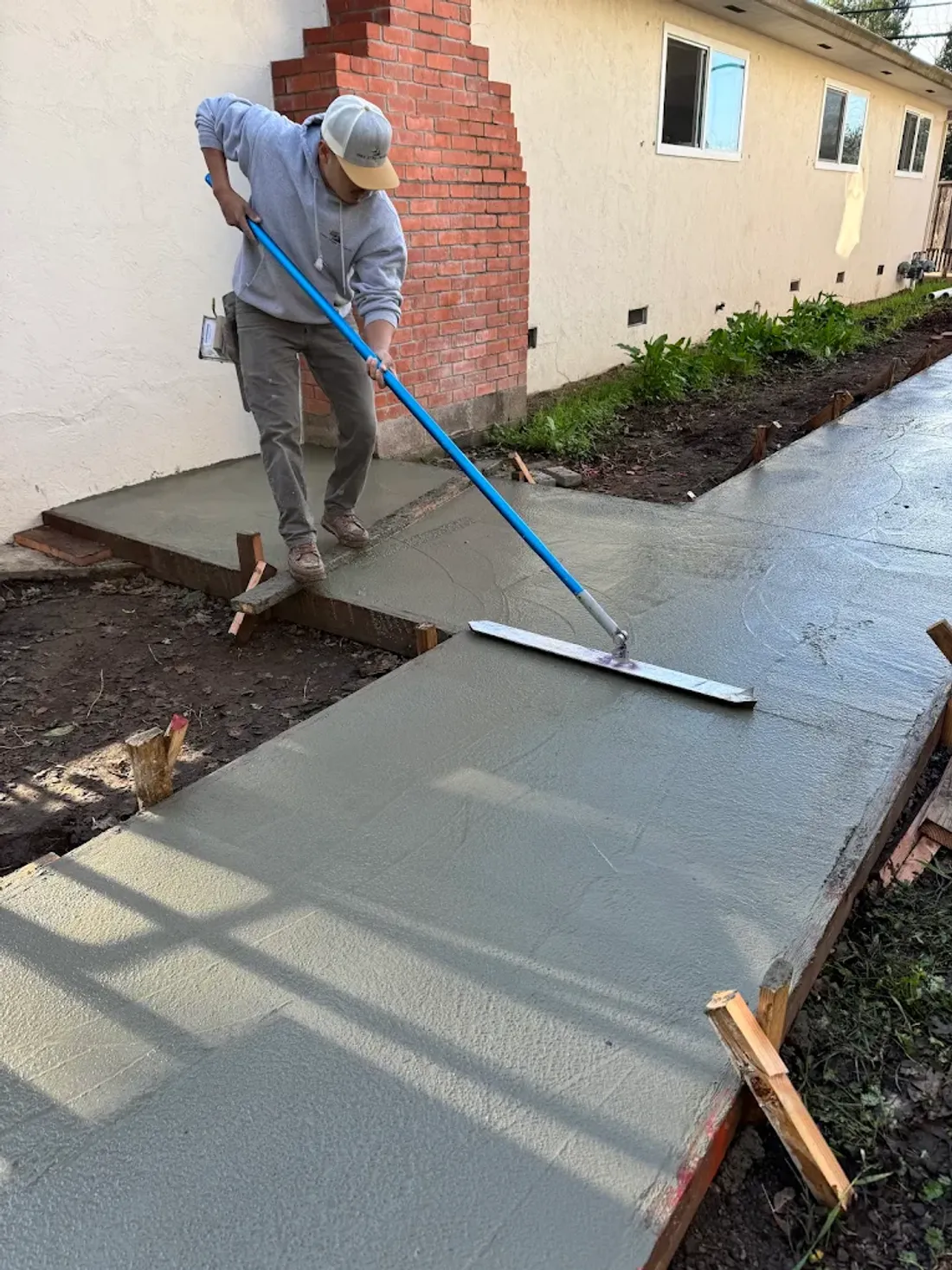
A concrete project is often discussed around one date: the pour. That is the day the most visible change happens, but it is not the whole schedule. The area has to be ready before concrete arrives, and the completed surface needs the appropriate care and protection afterward.
Weather is one part of that sequence. Access, design decisions, required inspections, material coordination, and the work of other trades can matter too. A useful schedule makes those dependencies clear instead of treating every stage as a fixed appointment unrelated to the one before it.
If you are planning a patio, driveway, or slab in Windsor or Sonoma County, think about the project in three time windows: before the date is confirmed, immediately around placement, and the period before full use resumes.
Before the date is confirmed: define what is actually ready
A proposed layout is not necessarily a construction-ready scope. The finish, dimensions, removal limits, drainage connections, and related work need enough definition for the contractor to organize the job. Structural or otherwise regulated work may also require the appropriate plans and approvals.
Tell the contractor which decisions are final and which are still open. If a pergola design, shed selection, or equipment requirement could change the concrete details, identify that before the schedule assumes the current drawing will stay the same.
The same applies to work by others. A drain relocation, utility installation, or required inspection may need to happen before placement. Ask who is responsible and how completion will be confirmed. A schedule should not depend on an unnamed person doing an unspecified task “before the concrete comes.”
At this stage, a target window may be more useful than an oversimplified fixed date. Ask what must happen before that window can be confirmed and when the contractor expects to review readiness. That gives you a practical way to organize the household and related work without mistaking an early estimate for a final construction sequence.
Prepare the site without getting ahead of the plan
The owner may need to move vehicles, furniture, planters, stored materials, or other items. Ask for a clear list and the point by which each item must be moved. Do not dismantle gates or remove landscaping simply because you think it might help access.
A contractor may use different routes or methods for demolition, preparation, and placement. The agreed access plan should guide your preparation. Opening one gate may not solve a narrow turn farther along the route, while moving a large object unnecessarily can create work without helping construction.
Identify the areas that must remain available. The main entrance, driveway, bins, deliveries, and pet access may all be affected. Explain any essential needs early enough for the sequence to consider them.
If the project replaces existing concrete, remember that the interruption begins before the new pour. Demolition and preparation can remove a familiar route for several stages of work. Make the temporary arrangement cover the complete project rather than only the day concrete is placed.
Around placement: let conditions inform the decision
The contractor needs to consider the conditions relevant to the actual concrete work. Weather should be reviewed with the placement, finishing, curing, and protection plan. A general statement that concrete can always be poured in a certain season is not a substitute for that assessment.
Ask how schedule decisions will be communicated if conditions require a change. Who will contact you? Which related trades or deliveries need to be updated? What happens to the temporary access arrangements if the placement date moves?
The owner’s role is not to override the construction decision based on a weather app or a personal deadline. It is to understand the dependencies and maintain a clear point of communication. If an event, move, delivery, or travel date matters, explain it before the schedule is set.
Avoid interpreting every change as lack of planning. Some conditions cannot be settled far in advance. What matters is whether the contractor explains the reason, the next step, and the effect on the overall sequence. A revised plan is easier to work with than an unchanged date that no longer reflects site readiness.
Keep the pour-day route clear
Once the placement arrangements are confirmed, the agreed access and staging areas need to remain available. A parked vehicle, delivery, or newly stored item can interfere with a route that looked clear during the estimate visit.
Share the plan with everyone who uses the property. Household members, tenants, employees, or another contractor may not know which space has been reserved. A short reminder can prevent a conflict at the moment materials arrive.
Do not move barriers or use the work area without checking with the crew. The site arrangement serves the construction sequence, and a shortcut through it can disrupt the plan or create a problem for the fresh surface.
If something changes unexpectedly, communicate directly. Explain what happened and where. The contractor can then decide how to respond within the actual work conditions. Guessing at a workaround is less useful than keeping the responsible person informed.
After placement: separate finished appearance from readiness
The concrete can look complete while restrictions still apply. Ask for the project-specific curing and return-to-use guidance before you need to act on it. The instructions should distinguish the activities that matter to your project.
Walking, parking, placing equipment, installing a structure, and applying a coating are different uses. Do not assume one date covers all of them. The relevant construction and product requirements should guide the handoff.
Our care-after-the-pour guide explains the planning questions in more detail. The key scheduling point is that this period belongs on the calendar. If the driveway is needed for vehicles or the slab is needed by another trade, their return depends on the actual readiness of the concrete.
Keep the guidance available to the people who may use the area. A delivery driver or family member should not have to infer the restrictions from how the surface looks. Clear communication helps the completed work get the start intended by the project plan.
Coordinate the next trade with a real handoff
A concrete project may be followed by rail installation, landscaping, a shed, a coating, or another construction phase. Tell the concrete contractor what that next activity involves and identify the person responsible for it.
The next trade should know the conditions required before starting. An installer bringing equipment may have different needs from someone completing light surrounding work. If a product system has specific requirements, coordinate them in advance rather than discovering them after the concrete is finished.
Ask who confirms the handoff. A calendar invitation based on the original pour date is not always enough if the sequence or conditions have changed. The responsible parties should communicate the current status and any remaining restrictions.
This approach can prevent two avoidable problems: a contractor arriving before the area is ready, or a completed area sitting unused because nobody knew the previous phase had reached the agreed condition. A simple confirmation step is often more useful than adding more detail to an outdated schedule.
Build a household calendar around the stages
For a residential project, a short stage-based calendar can be easier to follow than a list of technical tasks. Use the contractor’s current plan to identify when vehicles move, when a route closes, when placement occurs, and when each intended use may resume.
Add the activities that depend on those stages. Where will bins go? How will pets reach the yard? Which entrance should visitors use? Does a regular delivery need to be redirected? These are small details that become frustrating when nobody has considered them.
Keep tentative and confirmed information distinct. If a date depends on an inspection or conditions review, label that dependency. Update the household plan when the contractor updates the construction sequence.
The purpose is not to make the project feel more complicated. It is to reduce repeated uncertainty. Everyone using the property should be able to understand the current arrangement without asking the crew for the same explanation several times a day.
Compare schedules with the same scope
When reviewing estimates, check what each stated duration includes. One contractor may be describing the active concrete work while another includes removal, curing restrictions, and surrounding restoration. Those are different definitions of the project period.
Ask for the stages and the major dependencies rather than demanding a single number without context. A useful comparison includes the work area, access constraints, related trades, and the point at which the desired use returns.
If speed is a priority, explain why. There may be a practical way to simplify or phase the scope, but that should be a deliberate decision. The schedule should not rely on skipping required steps or treating fresh concrete as ready before the project guidance allows it.
Start with the timing you need, then build the plan
A good schedule connects the desired result to the work that has to happen before and after placement. It gives the owner clear preparation tasks, a point of contact for changes, and realistic handoffs to the next use.
Hard Stone Concrete plans concrete pouring, site preparation, and complete installation or replacement projects in Windsor and Sonoma County. Tell us about important dates and essential access when you contact us.
The pour date matters. The complete sequence is what makes that date useful.